GM 8200194 Clone Diagnostic Interface
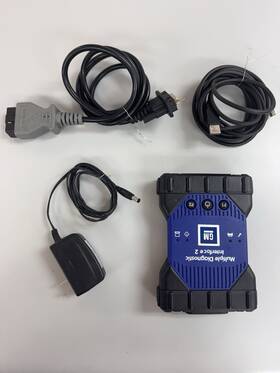
( Brand: Gm ), ( Manufacturer Part Number: 8200194 ), ( Part Type: Diagnostic ), ( Supported System: Abs ), ( Unit Type: Unit ), ( Vehicle Type: Passenger Vehicle ), ( Obd Interface: Obd )
Review GM Clone Multiple Diagnostic Interface
The **GM 8200194 Clone Diagnostic Interface** is a high-performance, universal diagnostic tool designed to replicate and enhance the functionality of the original **GM 8200194** scan tool, providing technicians and automotive enthusiasts with a comprehensive solution for diagnosing, programming, and troubleshooting General Motors (GM) vehicles spanning multiple generations. This advanced interface is engineered to seamlessly connect to a wide range of GM vehicles, including but not limited to models equipped with **OBD-II, OBD-I, and legacy CAN bus systems**, ensuring compatibility with everything from older **1996 and newer** vehicles to modern **2020s-era platforms** featuring advanced driver-assistance systems (ADAS) and integrated infotainment networks. Built with a robust **microcontroller-based architecture**, the device supports real-time data streaming, live parameter monitoring, and fault code retrieval, allowing users to pinpoint issues with precision while minimizing diagnostic time. Its **universal programming capabilities** extend beyond basic diagnostics, enabling users to perform **ECU reprogramming, key programming, and module initialization** critical functions that are often restricted on stock GM tools. The interface features a **high-speed USB 2.0 or Bluetooth connectivity** (depending on the variant), ensuring stable communication with modern diagnostic software while maintaining backward compatibility with legacy systems. Additionally, its **customizable data logging** and **graphical trend analysis** tools empower technicians to visualize engine performance, transmission shifts, and sensor behavior over time, aiding in both preventive maintenance and complex fault resolution. Whether used in a professional shop, a dealership, or a home garage, the **GM 8200194 Clone Diagnostic Interface** stands out for its **versatility, reliability, and deep integration with GM s vehicle control modules**, making it an indispensable asset for anyone working on GM-powered vehicles.
### **Pros and Cons of Buying a GM 8200194 Clone Diagnostic Interface**
#### **Pros:**1. **Cost-Effective Alternative** Clone interfaces are significantly cheaper than OEM (original equipment manufacturer) tools, making them accessible for independent mechanics, DIY enthusiasts, and small shops without deep budgets.
2. **Functionality Similar to OEM Tools** Many clones replicate the core features of the GM 8200194 (such as reading DTCs, clearing codes, and accessing basic vehicle data), allowing users to diagnose common issues without needing expensive factory tools.
3. **Compatibility with GM Vehicles** Designed to work with GM vehicles running the **GM 8200194 protocol**, these clones can interface with systems like **OnStar, security modules, and some engine control units (ECUs)** that require this specific diagnostic link.
4. **Portability** Most clones are compact and portable, allowing mechanics to carry them to job sites or use them in workshops without needing a dedicated workstation.
5. **Access to Basic Diagnostics** Useful for reading trouble codes, performing system tests, and retrieving live data streams, which can help identify mechanical or electrical faults before committing to costly repairs.
6. **Aftermarket Support** Many clones come with software updates or compatibility with third-party diagnostic software (e.g., **GM Tech 2, Snap-on, or Autel**), expanding their utility beyond basic code reading.
7. **Good for Learning** Helps users understand GM vehicle diagnostics before investing in more advanced (and expensive) tools.
---
#### **Cons:**1. **Limited Functionality Compared to OEM Tools** While clones can read codes and perform basic diagnostics, they often **lack advanced features** found in genuine GM tools, such as **full vehicle programming, ECU reprogramming, or advanced security bypasses**.
2. **Potential for Software Glitches** Cheaper clones may have **unstable firmware, frequent crashes, or compatibility issues** with newer GM vehicle models, especially those with updated security protocols.
3. **No Official Warranty or Support** Since these are aftermarket products, manufacturers often provide **minimal or no customer support**, leaving users to troubleshoot issues independently.
4. **Risk of Voiding Warranty** Some GM dealerships and insurance companies **disallow the use of non-OEM diagnostic tools**, which could lead to **warranty voidance** or complications during repairs.
5. **Security Risks** GM vehicles use **encryption and authentication protocols** to prevent unauthorized access. Some clones may **bypass security weakly**, leading to **temporary or permanent lockouts** if the vehicle s security system detects unauthorized attempts.
6. **Incompatibility with Latest Models** Newer GM vehicles (especially those with **OnStar, advanced driver-assistance systems, or updated software**) may **not fully support clones**, leading to **limited or no functionality** in certain modules.
7. **Quality Variability** The aftermarket for diagnostic clones is **not regulated**, meaning some products may be **poorly made, unreliable, or even counterfeit**, leading to **malfunctions or data corruption**.
8. **No Access to Full Vehicle Data** Unlike OEM tools, clones may **not retrieve all available diagnostic data**, such as **sensor calibration values, full fault history, or advanced system logs**, which could lead to **missed diagnoses**.
9. **Potential for Bricking the Tool** Cheap clones may **crash or become unusable** if firmware is corrupted, especially if not properly updated or if used with incompatible software.
10. **Ethical and Legal Concerns** Some clones **bypass security measures** that GM has implemented to prevent unauthorized access. While not always illegal, **excessive or improper use** could violate GM s terms of service or local regulations.
---
### **Conclusion**
A **GM 8200194 clone diagnostic interface** can be a **valuable tool for basic diagnostics, cost-conscious mechanics, and DIY enthusiasts** who need to read codes, clear faults, and perform simple tests on GM vehicles. It offers **affordability and portability**, making it a practical choice for those who primarily work on **older or simpler GM models**.
However, it is **not a replacement for OEM tools** in professional or high-end automotive environments. The **limited functionality, potential security risks, lack of official support, and incompatibility with newer vehicles** make it **unreliable for advanced diagnostics, programming, or warranty-covered repairs**.
For **serious mechanics, dealerships, or those working on modern GM vehicles**, investing in an **OEM tool (such as GM Tech 2 or a dealership-level diagnostic system)** is far more **reliable, secure, and comprehensive**. Clones are best suited for **budget-conscious users who only need basic troubleshooting** and are willing to accept their limitations.
---
### **Recommendation**
- **Buy a Clone If:**- You are a **DIY mechanic or hobbyist** working on **older GM vehicles** (pre-2010s).
- You primarily need **basic code reading, clearing, and simple system tests**.
- You are **willing to accept limitations** and have **no warranty concerns**.
- You plan to **supplement it with other diagnostic tools** (e.g., multimeter, scan tools for other brands).
- **Avoid a Clone If:**- You work on **modern GM vehicles (2015 ) with advanced security or OnStar**.
- You need **full diagnostic coverage, ECU programming, or warranty-related repairs**.
- You require **reliable, long-term support** and are unwilling to risk **vehicle lockouts or data corruption**.
- You are a **professional mechanic or dealership** where **accuracy and compliance** are critical.
- **Alternative Options:**- **Mid-Range OEM Tools (e.g., GM Tech 2, Snap-on, or Autel MaxiCOM)** More reliable than clones but still affordable.
- **Third-Party High-End Tools (e.g., Launch X431, Foxwell GT1)** Better compatibility with GM vehicles than most clones.
- **Rent or Borrow an OEM Tool** If occasional use is needed, borrowing from a dealership or repair shop may be worth the cost.
**Final Verdict:** A GM 8200194 clone is a **useful budget tool for basic diagnostics**, but it is **not a substitute for professional-grade equipment**. Use it wisely, within its limitations, and consider upgrading if your needs grow beyond simple code reading.
Details:
This unit provides an interface for reading diagnostic trouble codes and performing tests on vehicles with OBD. The Clone GM Multiple Diagnostic Interface 2 is a diagnostic tool designed for passenger vehicles. The product, with part number 8200194, allows for efficient and accurate troubleshooting of systems, making it a valuable addition to any automotive diagnostic service toolkit.
part #: 8200194 prices
- $346.77-$600.00
specifications codereadescanne:
- brand: Gm
- mpn: 8200194
- part type: Diagnostic
- supported system: Abs
- unit type: Unit
- vehicle type: Passenger Vehicle
- obd interface: Obd
payments codereadescanne:
- other
- money order
- credit card: Mastercard
- wallet: Apple-pay
offer codereadescanne:
- options: Ship-to-home
- started: February 24, 2026
- sold: 0
- quantity: 1
- availability: In Stock
shipping codereadescanne:
- transit: 4-11 Days
- cost: $8.97
- type: Calculated
- service: USPS Ground Advantage
- carrier: USPS
- class: Standard
returns codereadescanne:
- policy: No Returns
general codereadescanne:
- condition: Used
- Automotive Tools Supplies > Diagnostic Service Tools > Code Readers Scanners
seller codereadescanne:
- city: Middletown, New York
- # reviews: 16
- rating: 100.0%
Gm 8200194 Is Similar To:
- 082005521 General Motors Gm Memory Card Software Diagnostic Tool (42.9% similar) Brand new 32 MB memory card for TECH2 scanner diagnostic tool. This memory card is loaded with the latest Gm software. Have any questions...(June 12th, 2018)
- 0913v36034 Bosch Diagnostic Scanner With Box Card For Gm Saab Suzuki (36.2% similar) Used excellent working condition. Original box, candid, memory card for Saab, Suzuki, Isuzu...(December 6th, 2018)
- 197001 Mpsi Gm Systems Diagnostic Manual Spiral (44.2% similar) Excellent condition. Psi 1997 Gm systems diagnostic manual this listing includes 1 pro-link pages spiral book. Fast free shipping...(August 14th, 2018)
- 212653 Otc Gm Diagnostic Cable Possibly Part (37% similar) Accessories includes only what is shown in photos and or listed in the. This includes internal photographs, if relevant. OTC Gm diagnostic cable, possibly part this listing is for the 1 cable shown. If you prefer to ask your question privately, please let us know. Purchased at a government surplus ...(May 3rd, 2016)
- 3000119 New Gm Tech 2 Vci Module Tech2 Interface (47.9% similar) Gm tech 2 Vic MODULE3000119BRAND new Vic and free shipping...(November 7th, 2015)
- 3000211 El-47955-4 F-00k-108-542 F-00k-108-029 Unbranded Gm Mdi Multiple Diagnostic Interface Dlc Cable (45% similar) ...(July 22nd, 2018)
- 3750a34876 Spx Otc Tech Flash Diagnostic Scanner Ii Gm (41.2% similar) Good condition, see all 12 pics for details. Used spx OTC tech 2 flash diagnostic scanner. Includes all the extras shown in pics...(June 23rd, 2018)
- 8656900595650696 Ausland For Chrysler Toyota Gm Ford Series Car Diagnostic Scanner (30.8% similar) Part: 8656900595650696 prices...(October 27th, 2018)
- 94-011 Vetronix Gm Tech All Ecm Diagnostic Cartridge (42% similar) ...(November 2nd, 2018)
- 9889840021123123 Ausland For Gm Ford Chrysler Toyota Diagnostic Scanner Tool Abs (35.9% similar) Part: 9889840021123123 prices...(October 16th, 2018)
- 81-5029 Auto Xray Automotive Power Diagnostic Scanner Gm (46.2% similar) Takes 4 AA batteries. This is a auto Cray Gm scanner says Gm scanner on box, Sn, only used couple times, have machine and cable and user manual, took batteries out for shipping...(September 25th, 2016)
