FORD A11080710000A139 Sct Xcalibartor Handheld Obd Reader Car Scanner Device
fits make: Ford. year: 1996.
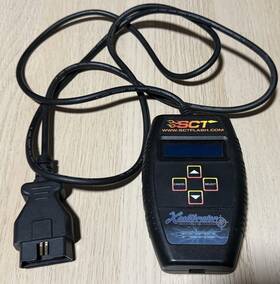
( Manufacturer Part Number: A11080710000A139 ), ( Part Type: Reader Device ), ( Obd Interface: Obd )
Review FORD Sct Xcalibartor Handheld Obd Reader Car Scanner Device fits 1996
The **Ford A11080710000A139 SCT Xcalibrator Handheld OBD Reader** is a rare and highly specialized diagnostic tool designed exclusively for Ford s legacy vehicle systems, particularly those manufactured in the mid-to-late 1990s. This compact yet powerful handheld scanner is a direct descendant of Ford s proprietary **Scan Tool X (SCT)**, a system originally developed to interface with the company s early on-board diagnostics (OBD) platforms, including the **OBD-I (OBD1)** and **OBD-II** systems that were just beginning to emerge. Unlike generic aftermarket scanners, the A11080710000A139 is engineered to communicate with Ford s unique **SCT (Scan Tool X) protocol**, which predates the standardized OBD-II framework, allowing it to access a wealth of engine, transmission, and chassis data that most modern scanners cannot retrieve. This makes it an invaluable asset for mechanics, restorers, and enthusiasts working on older Ford models, particularly those equipped with **EEC-IV (Electronic Engine Control IV) systems**, which were standard in vehicles like the **1996 Ford Taurus, Ford Taurus SHO, Ford Mustang, or Ford Explorer**, among others.
Physically, the device is a rugged, handheld unit with a monochrome LCD display and a minimalist interface, reflecting its era as a cutting-edge diagnostic tool when it was first introduced. The scanner features a **serial port connection** (typically via a 9-pin D-sub connector), allowing it to interface with a vehicle s **Data Link Connector (DLC)**, which was often located under the dashboard or near the steering column. While it lacks the flashy graphics and expansive menus of contemporary scanners, its simplicity is deceptive beneath its unassuming exterior lies a sophisticated system capable of reading **fault codes (DTCs), live data streams, and even performing basic calibration adjustments** for certain Ford applications. One of its most distinctive features is its ability to interact with **Ford s proprietary calibration tools**, such as the **Xcalibrator software**, which was used in conjunction with the SCT to fine-tune engine parameters, adjust throttle response, or troubleshoot complex electrical issues that generic OBD-II scanners might overlook.
Beyond its diagnostic capabilities, the A11080710000A139 SCT Xcalibrator stands out for its **historical and practical value** in preserving the integrity of older Ford vehicles. Many of these cars were not designed with modern OBD-II compatibility in mind, and their electronic systems rely on legacy protocols that are no longer supported by mainstream manufacturers. The scanner s ability to retrieve **EEC-IV codes** such as **P0100 (Mass or Volume Air Flow Circuit Malfunction)** or **P0120 (Throttle Position Sensor Circuit Malfunction)** provides mechanics with precise troubleshooting information that can be critical in diagnosing intermittent issues or restoring factory performance. Additionally, for enthusiasts working on **high-performance or modified engines**, the scanner s capacity to read and adjust **fuel trims, spark timing, and load values** can be essential for maintaining optimal engine operation without voiding warranties or requiring expensive dealer-level diagnostics.
Despite its age, the A11080710000A139 remains a **highly sought-after tool** among Ford specialists, partly due to its scarcity. As older Ford models continue to be restored or repurposed, the demand for authentic, factory-approved diagnostic equipment has grown, making this scanner a prized addition to any mechanic s toolkit. While it may not offer the same level of connectivity as modern Wi-Fi-enabled scanners, its **direct compatibility with Ford s legacy systems** ensures that it remains one of the most accurate and reliable tools for diagnosing and fine-tuning vehicles from the late 1990s. For collectors, restorers, and professionals who value precision and authenticity, the Ford SCT Xcalibrator is not just a diagnostic device it is a gateway to understanding and preserving the intricate electronics of Ford s golden era.
### **Pros and Cons of buying a Ford A11080710000A139 SCT Xcalibrator Handheld OBD Reader (1996 Model)**
#### **Pros:**1. **Compatibility with Ford Systems** This device is specifically designed for Ford vehicles, including older models with the **SCT (Scan Tool Connector)** interface, which was common in late 1990s and early 2000s Ford trucks and SUVs (e.g., F-150, Excursion, Expedition, Ranger, etc.). It interfaces directly with the vehicle s onboard computer for diagnostics.
2. **Advanced Diagnostic Capabilities** Unlike basic OBD-I (pre-1996) or OBD-II scanners, this tool provides **engine and transmission diagnostics**, including fault codes, live data streaming, and some system testing features. It can read **P-codes (Powertrain Control Module codes)** and **T-codes (Transmission Control Module codes)**, which are essential for older Ford vehicles.
3. **Handheld and Portable** The device is compact and designed for field use, allowing mechanics or DIYers to diagnose issues without needing a full diagnostic bay setup.
4. **Legacy Support** Many older Ford vehicles (pre-2000) did not have OBD-II compliance, making this tool one of the few options for proper diagnostics on these models.
5. **Potential for Resale Value** Since diagnostic tools for older Ford systems are becoming rarer, this tool may retain value if well-maintained.
---
#### **Cons:**1. **Limited to Ford Systems** This scanner is **not universal** and will not work on non-Ford vehicles, even if they use similar protocols. It is also not compatible with modern OBD-II scanners (e.g., ELM327-based tools).
2. **Outdated Technology** The 1996 model is **very old** (over 25 years since release), meaning:- **No software updates** Unlike newer tools, this one lacks firmware updates for emerging issues.
- **Potential hardware degradation** The internal electronics may fail over time, especially if the device has not been well-maintained.
- **Incompatibility with newer Ford systems** Even some late 1990s/early 2000s Ford models may require newer SCT interfaces or software versions.
3. **No Wireless or Bluetooth Connectivity** Unlike modern scanners, this device likely requires a **direct wired connection** to the vehicle s SCT port, which can be inconvenient for quick checks.
4. **Learning Curve** The interface and code structure may be unfamiliar to users accustomed to modern OBD-II scanners, requiring time to interpret P-codes and T-codes effectively.
5. **Hardware Reliability Concerns** Older electronic devices are prone to **battery drain, corroded connectors, or failing displays**. The 1996 model may have **CRT (cathode-ray tube) or early LCD screens**, which can degrade over time.
6. **Limited Functionality Compared to Modern Tools** Newer diagnostic tools offer **graphical interfaces, wireless connectivity, advanced troubleshooting guides, and compatibility with aftermarket parts**. This tool lacks those features.
7. **Potential for Counterfeit or Damaged Units** Since this is an older, specialized tool, there is a risk of purchasing a **used, damaged, or counterfeit version** if buying from a secondhand seller.
---
### **Conclusion:**The **Ford A11080710000A139 SCT Xcalibrator (1996)** is a **niche but valuable tool** for diagnosing **pre-2000 Ford vehicles** that rely on the SCT interface. It fills a gap for mechanics working on older Ford trucks and SUVs where OBD-II scanners are ineffective. However, its **age, limited compatibility, lack of modern features, and potential reliability issues** make it a **high-risk purchase** unless you are specifically targeting older Ford diagnostics.
For most users today, **modern OBD-II scanners (e.g., Foxwell, Launch, or Autel)** are far more practical due to their **universality, wireless capabilities, and advanced features**. However, if you **specifically need to work on late 1990s Ford vehicles with SCT systems**, this tool may still be useful **provided it is in excellent working condition**.
---
### **Recommendation:** - **Buy Only If:**- You **exclusively work on late 1990s/early 2000s Ford vehicles** with SCT ports.
- You **find a well-documented, tested, and preferably new or refurbished unit** (avoid eBay or Craigslist without inspection).
- You are **prepared to invest time in learning P-codes and T-codes** (Ford s diagnostic structure differs from OBD-II).
- You **accept that it is a legacy tool** with no future updates or modern features.
- **Avoid If:**- You need a **universal or modern diagnostic tool** for a wide range of vehicles.
- You are unsure about the **device s condition** (test the display, connectors, and functionality before purchasing).
- You are looking for **wireless, app-based, or advanced troubleshooting features**.
- You can find a **reliable alternative** (e.g., a used **Ford SCT-128 or SCT-2000** from a trusted seller).
- **Alternative Options:**- **Ford SCT-128 or SCT-2000** (later models with better reliability).
- **OBD-II scanners with Ford-specific software** (e.g., **Foxwell FT608, Autel MaxiCOM K-Pro**).
- **Aftermarket SCT adapters** (if you have a modern scanner but need SCT compatibility).
### **Final Verdict:**This tool is **not a "must-have" for most modern mechanics**, but it **remains essential for Ford specialists working on older vehicles**. If you proceed, **prioritize condition, authenticity, and compatibility** with your specific vehicle models. Otherwise, a **modern OBD-II scanner with Ford support** is a far more practical and future-proof investment.
Details:
With its user-friendly interface and compatibility with OBD systems, this scanner provides accurate information for efficient repairs improvements. It is a reliable diagnostic tool that allows users to read out the on-board computer systems data and fault codes, making it convenient essential for troubleshooting maintenance tasks. The SCT Xcalibartor 2 Handheld OBD Reader Car Scanner is specifically designed for Ford vehicles from 1996 and onwards.
part #: a11080710000a139 price
- $90.00
specifications codereadescanne:
- for makes: Ford
- for years: 1996
- mpn: A11080710000a139
- part type: Reader Device
- obd interface: Obd
seller codereadescanne:
- # reviews: 423
- city: Jacksonville, Florida
- rating: 100.0%
shipping codereadescanne:
- cost: $0.00
- class: Standard
- transit: 8-12 Days
- service: USPS Ground Advantage
- carrier: USPS
- type: Calculated
returns codereadescanne:
- policy: No Returns
general codereadescanne:
- Automotive Tools Supplies > Diagnostic Service Tools > Code Readers Scanners
- condition: Used
payments codereadescanne:
- other
- wallet: Apple-pay
- credit card: Mastercard
offer codereadescanne:
- started: February 13, 2026
- availability: In Stock
- options: Ship-to-home
- best offers: True
- quantity: 1
- sold: 0
Ford A11080710000A139 Is Similar To:
- Lowered 007-0041a Scanner Star Case Tester Rotunda Super Ford Ii (21.8% similar) Ford rotunda super star ii tester 007 0041A with case it looks complete and it seems to be in working condition as pictured, but I can't further test it so selling it as parts. Thanks and have fun...(April 11th, 2015)
- 007-00017 Rotunda Ford Star Code Reader With Case And Instructions (32.2% similar) Rotunda ford star code reader with case and instructions. Free shipping...(November 15th, 2016)
- 1201f0gvbwy Ohp Ford Elmconfig Forscan Adapter Usb Device Switch Diy Diagnostics (27% similar) Package dimensions: the for scan OBD2 adapter allows access to all modules on supported model's: engine, gearbox, abs, airbag, climate control etc. 4 unstopping ship to the lower 48 states only. for scan OBD2 adapter USB device ms-can switch ford DI diagnostics the can be used for all fords and ...(February 27th, 2019)
- 1981-1994 Ford Code Reader Model 07-4977 (30.9% similar) Happy buying. Bought and never used...(April 1st, 2017)
- Ford Code Reader 1981-1995 042173031450 (31.1% similar) Used for a repair, worked great, sold the vehicle, don't need it for ford, Lincoln mercury domestic cars, trucks and vans. Ford code reader and book...(January 2nd, 2016)
- Cable 20120 Autoxray Obd Interface Part 1 Ford (27.9% similar) Please see pictures. Although the cable has never been used, the original packaging is a bit worn. They are part of the and show details...(March 31st, 2015)
- 22506 Code Reader Scanner Ford Digital Innova Automotive Tools 7426873022506 (31.4% similar) Part: 7426873022506 prices...(March 8th, 2018)
- 3149 Innova Extension Cable For Ford Code Reader Item 3145 New (26.2% similar) If you choose economy shipping, most items ship fed ex smart post 2/8 day delivery. If you do not feel like i've provided 5 star service, I want to hear from you. If you do not feel like i've provided 5 star service, I want to hear from you. If you choose economy shipping, most items ship fed ex ...(February 3rd, 2016)
- 35734 For Ford Digital Code Reader Scanner Electronics Scan 7426870835734 (41% similar) Part: 7426870835734 prices...(October 25th, 2018)
- 35901 For Ford Code Reader Scanner Digital Electronics Scan 7426870835901 (38.5% similar) Part: 7426870835901 prices...(November 4th, 2018)
- Mpsi 401008 Dcl 9000 6 Prolink Ford Eec Pin Pro-link Scanner Adapter Iv Nexiq (26.3% similar) ...(April 23rd, 2015)
