EASE WVI-12CAN Wireless Interface Cables WVI-12-CAN FVI-12-CAN FSI-OBD12
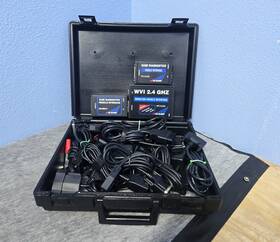
( Brand: Ease ), ( Manufacturer Part Number: WVI-12CAN ), ( Part Type: Cable ), ( Obd Interface: Obd )
Review EASE Wireless Vehicle Interface Cables
The **Ease WVI-12CAN Wireless Interface** is a cutting-edge, high-performance solution designed to bridge the gap between traditional wired CAN (Controller Area Network) diagnostics and the flexibility of wireless connectivity, making it an indispensable tool for automotive technicians, engineers, and enthusiasts alike. This advanced interface combines the reliability of CAN communication with the convenience of wireless data transfer, enabling real-time monitoring, logging, and analysis of vehicle systems without the constraints of cabling. The WVI-12CAN operates seamlessly with a wide range of diagnostic tools, including OBD-II scanners, ECU programmers, and data acquisition systems, while its compact yet robust design ensures durability in both workshop and on-road environments. Whether you're troubleshooting complex engine management issues, calibrating performance systems, or conducting extensive data logging for research or tuning, this wireless interface delivers unparalleled precision and ease of use. Its compatibility with multiple protocols such as CAN, CAN FD, and ISO 15765 makes it a versatile choice for modern vehicles equipped with advanced telematics and electronic control units. The accompanying **FVI-12-CAN** and **FSI-OBD12** cables further enhance its functionality, providing secure and high-speed connections to the vehicle s diagnostic ports and OBD-II interfaces. With its intuitive software integration and low-latency wireless transmission, the Ease WVI-12CAN eliminates the hassle of tangled wires while maintaining the integrity of diagnostic data, making it an essential upgrade for professionals seeking efficiency and accuracy in automotive diagnostics.
### **Pros and Cons of buying a Ease WVI-12CAN Wireless CAN Interface (WVI-12-CAN, FVI-12-CAN, FSI-OBD12 Cables)**
#### **Pros**
1. **Wireless CAN Communication**
The WVI-12-CAN module eliminates the need for physical wiring between a CAN bus and a computer or diagnostic tool. This is particularly useful in applications where cables are impractical, such as in moving vehicles, large machinery, or environments with limited space.
2. **Versatility with Multiple Cables**
The kit includes several cables (FVI-12-CAN, FSI-OBD12, etc.), which provide flexibility in connecting to different devices:- **FVI-12-CAN** allows direct connection to a CAN bus via a 12-pin connector.
- **FSI-OBD12** enables OBD-II compatibility, making it easier to interface with standard automotive diagnostic tools.
- This modularity ensures compatibility with various systems, from industrial equipment to vehicles.
3. **Long-Range Wireless Transmission**
The wireless interface supports reliable CAN communication over a significant range (typically up to 100 meters, depending on environmental conditions), reducing the need for long, bulky cables.
4. **Compatibility with CAN Bus Standards**
The device adheres to standard CAN (Controller Area Network) protocols, ensuring seamless integration with most CAN-based systems, including automotive, industrial, and robotic applications.
5. **Easy Installation and Setup**
The wireless module is designed for straightforward integration. It often comes with clear documentation and software support, making it accessible for both professionals and hobbyists.
6. **Reduced Cable Management Issues**
In complex systems with multiple devices, wireless communication reduces clutter and the risk of cable damage or interference, improving overall system reliability.
7. **Useful for Remote Monitoring and Diagnostics**
The wireless capability allows for remote diagnostics and monitoring of CAN-based systems, which is valuable in applications like fleet management, industrial automation, or vehicle testing.
---
#### **Cons**
1. **Limited Range in Certain Conditions**
While the wireless range is generally adequate, it can be affected by physical obstructions (walls, metal structures), interference from other wireless devices (Wi-Fi, Bluetooth), or electrical noise. In such cases, the effective range may be significantly reduced.
2. **Potential Latency**
Wireless communication, even low-latency CAN wireless solutions, may introduce slight delays compared to wired connections. For high-speed or real-time applications requiring millisecond precision, this could be a drawback.
3. **Security Concerns**
Wireless communication is inherently more vulnerable to eavesdropping or unauthorized access compared to wired connections. While CAN bus traffic itself is not typically encrypted, the wireless transmission could be intercepted if not properly secured (e.g., with encryption or authentication protocols).
4. **Dependence on Power Supply**
The wireless module requires a stable power source. If the power supply fails or is unstable, the communication link may drop, disrupting operations. This is less of an issue with wired connections.
5. **Cost Compared to Wired Alternatives**
While the wireless interface may save money in the long run by eliminating the need for extensive cabling, the initial cost of the wireless module and associated cables (e.g., FVI-12-CAN, FSI-OBD12) can be higher than a simple wired CAN adapter.
6. **Compatibility Limitations with Older Systems**
Some legacy CAN systems or non-standard implementations may not fully support wireless communication, requiring additional adapters or modifications.
7. **Regulatory and Licensing Considerations**
Depending on the region, wireless communication devices may require certification (e.g., FCC compliance in the U.S., CE marking in Europe). This could add complexity to procurement and deployment.
8. **Potential for Interference**
In environments with dense wireless traffic (e.g., factories with multiple wireless devices), the WVI-12-CAN module may experience interference, leading to dropped packets or unreliable communication.
---
### **Conclusion**
The Ease WVI-12CAN wireless CAN interface is a powerful tool for applications where wired connections are impractical or inconvenient. Its wireless capabilities offer flexibility, reduced cable management, and ease of use, particularly in automotive diagnostics, industrial automation, and remote monitoring. However, potential drawbacks such as limited range, latency, security risks, and cost must be carefully considered before purchasing.
For users working in environments where wireless communication is critical and interference is minimal, the WVI-12-CAN is an excellent choice. Conversely, for high-precision, low-latency applications or systems with strict security requirements, a wired CAN interface may still be preferable.
---
### **Recommendation**
**Buy the Ease WVI-12CAN Wireless Interface if:**- You need wireless CAN communication for automotive diagnostics, industrial equipment, or remote monitoring.
- Your application involves moving vehicles or environments where cabling is difficult to manage.
- You prioritize flexibility and ease of installation over absolute low-latency or wired reliability.
- You are working in a controlled environment with minimal wireless interference.
**Avoid or Consider Alternatives if:**- Your application requires ultra-low latency or real-time precision (e.g., high-speed robotics).
- Security is a critical concern, and wired connections are feasible.
- You are operating in a highly congested wireless environment where interference is a risk.
- Your budget is constrained, and wired CAN solutions are equally effective for your needs.
For most users seeking a balance between convenience and performance, the Ease WVI-12CAN is a solid investment, especially when paired with the included cables (FVI-12-CAN, FSI-OBD12) for added versatility. Always ensure compatibility with your specific CAN bus system and test the wireless range in your intended environment before full deployment.
Details:
It shows signs of use; scratches, scuffs, sticker residues etc. If you don't see something in pictures then it will not be included. Free shipping service qualifies to the lower 48 states only. NOT INCLUDED: Module Card Not Included.
1 X - EASE WIRELESS VEHICLE INTERFACE WVI-12-CAN W/FVI-12-CAN,FSI-OBD12 CABLES. Technical help is not available at all. NOTE: FedEx do not delivery to P.O.Box.
part #: wvi12can price
- $349.99
specifications codereadescanne:
- brand: Ease
- mpn: Wvi-12can
- part type: Cable
- obd interface: Obd
returns codereadescanne:
- paid by: Seller
- time: 30 Days
- policy: Returns Accepted
seller codereadescanne:
- rating: 100.0%
- # reviews: 4107
- city: California
payments codereadescanne:
- wallet: Apple-pay
- credit card: Mastercard
- other
shipping codereadescanne:
- class: Standard
- type: Fixed
- service: Standard
- cost: $0.00
- transit: 2-7 Days
offer codereadescanne:
- started: February 10, 2026
- options: Ship-to-home
- sold: 0
- best offers: True
- availability: In Stock
- quantity: 1
general codereadescanne:
- Automotive Tools Supplies > Diagnostic Service Tools > Code Readers Scanners
- condition: Used
